Archives
- 2026-07
- 2026-06
- 2026-05
- 2026-04
- 2026-03
- 2026-02
- 2026-01
- 2025-12
- 2025-11
- 2025-10
- 2025-09
- 2025-03
- 2025-02
- 2025-01
- 2024-12
- 2024-11
- 2024-10
- 2024-09
- 2024-08
- 2024-07
- 2024-06
- 2024-05
- 2024-04
- 2024-03
- 2024-02
- 2024-01
- 2023-12
- 2023-11
- 2023-10
- 2023-09
- 2023-08
- 2023-06
- 2023-05
- 2023-04
- 2023-03
- 2023-02
- 2023-01
- 2022-12
- 2022-11
- 2022-10
- 2022-09
- 2022-08
- 2022-07
- 2022-06
- 2022-05
- 2022-04
- 2022-03
- 2022-02
- 2022-01
- 2021-12
- 2021-11
- 2021-10
- 2021-09
- 2021-08
- 2021-07
- 2021-06
- 2021-05
- 2021-04
- 2021-03
- 2021-02
- 2021-01
- 2020-12
- 2020-11
- 2020-10
- 2020-09
- 2020-08
- 2020-07
- 2020-06
- 2020-05
- 2020-04
- 2020-03
- 2020-02
- 2020-01
- 2019-12
- 2019-11
- 2019-10
- 2019-09
- 2019-08
- 2019-07
- 2019-06
- 2019-05
- 2019-04
- 2018-07
-
Throughout our studies we used CBD
2021-11-30
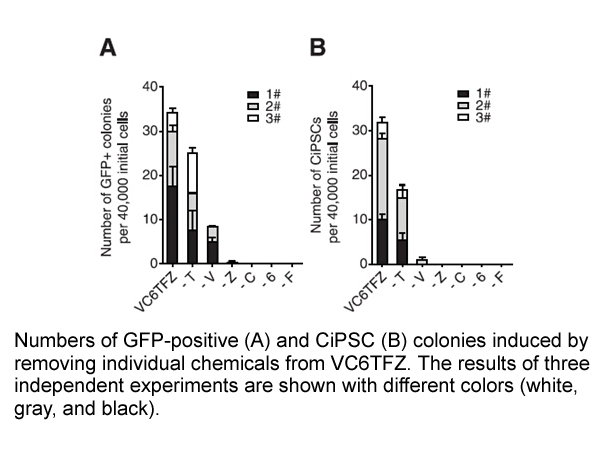
Throughout our studies we used CBD under the assumption that it binds to the GPR55 receptor and has antagonist properties at the GPR55 receptor, as previously suggested (Whyte et al., 2009). To clarify whether the GPR55 receptor is involved in the O-1602-mediated effects on GI motility, we performed
-
In order to elucidate the mechanisms behind the observed cha
2021-11-29
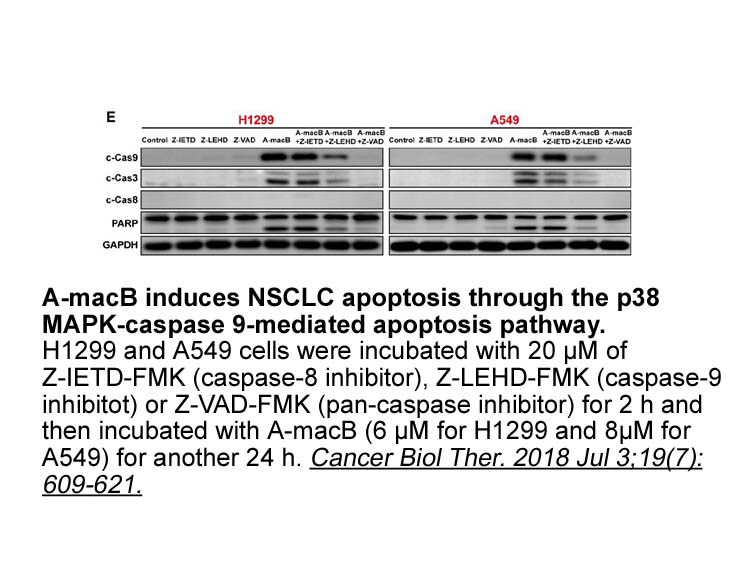
In order to elucidate the mechanisms behind the observed changes in metabolic activity in the cardiomyoblasts we investigated changes in gene and protein expression subsequent to treatment with PSN632408 with or without concurrent exposure to palmitate. Activating GPR119 in basal and high palmitate
-
The aim of this study is
2021-11-29
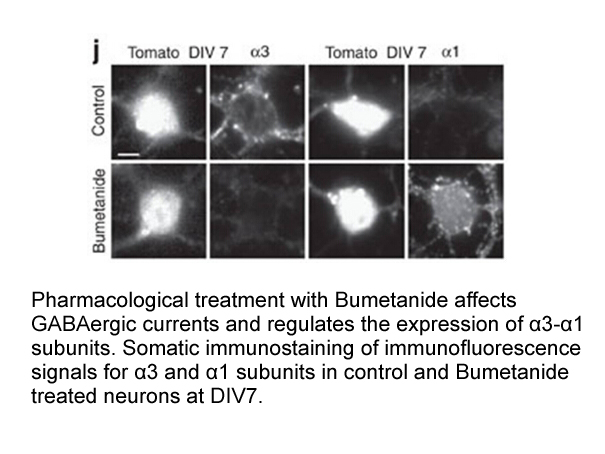
The aim of this study is to explore new Glo-I inhibitors using the structure-based pharmacophore approach. Eighteen Glo-I co-crystallized structures have been explored to investigate their pharmacophoric features. Ninety two pharmacophoric models were generated. QSAR analysis followed by Ligand Prof
-
We were able to obtain several crystalline forms of
2021-11-29

We were able to obtain several crystalline forms of CHAV Gth. The first one corresponded to the post-fusion conformation [14]. The comparison of this structure with that of VSV-Gth post-fusion conformation revealed that the PHD is the most divergent domain, with the largest differences confined to t
-
power compact Introduction Carbohydrates are some of the mos
2021-11-29

Introduction Carbohydrates are some of the most stereochemically complex biological molecules found in nature. In addition to their energetic and structural roles in living systems, their role when covalently linked to proteins is critically important in a myriad of molecular recognition processes.
-
br Treatment KD is currently the treatment of
2021-11-29
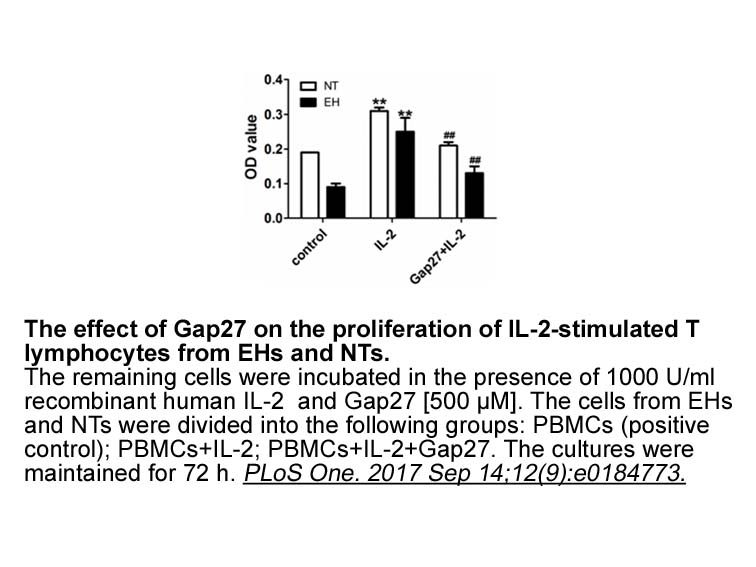
Treatment KD is currently the treatment of choice for GLUT1-DS. It is a high-fat, carbohydrate-restricted diet that mimics the metabolic state of fasting; so, the KD relies an exogenous rather than body fat for ketone production, thus maintaining ketosis without weight loss. As the developing br
-
Since our new compound Fex could be a new FXR
2021-11-29
Since our new compound Fex-3 could be a new FXR ligand, we try to demonstrate that Fex-3 was an intestinal-restricted FXR agonist which only activated FXR in the intestine not in the liver or other organs. Initially, we investigated this in Caco-2 HBC with transwell experiments. From and , we found
-
Since our new compound Fex could be a new FXR
2021-11-29
Since our new compound Fex-3 could be a new FXR ligand, we try to demonstrate that Fex-3 was an intestinal-restricted FXR agonist which only activated FXR in the intestine not in the liver or other organs. Initially, we investigated this in Caco-2 dacomitinib with transwell experiments. From and ,
-
Preliminary explorations focused on the linker of Table Lill
2021-11-29
Preliminary explorations focused on the linker of 2 (Table 1). Lilly reported that the methylene between the phenyl and the piperidyl group was metabolically susceptible to N-dealkylation, so we replaced the methylene with a carbonyl moiety to block the metabolic site [23,48] (Fig. 2). In addition,
-
Previous evidence suggests that PRC is
2021-11-29
Previous evidence suggests that PRC2 is an important regulator of chromatin looping interactions in embryonic stem NVP-CGM097 . The new study by Donaldson-Collier and colleagues provides the first evidence that similar processes may be at play in lymphoma. It is still largely unclear, however, both
-
The lysine K specific demethylase KDM family is comprised
2021-11-29
The lysine (K)-specific demethylase 4 (KDM4) family is comprised of 4 isoforms, KDM4A to -D, also known as JMJD2A to -D. KDM4A, B, and C encode proteins consisting of a JmjC, a JmjN, two PHD, and two Tudor domains. KDM4D is unique within the KDM4 family in that it has neither PHD nor Tudor domains,
-
br Conflict of interest br Funding This work was
2021-11-29
Conflict of interest Funding This work was supported by the National Institutes of Health MSK Cancer Center Support Grant/Core Grant [P30 CA008748]. The funding source had no involvement in the study design; in the collection, analysis and interpretation of data; in the writing of the report;
-
There are five subfamilies of P
2021-11-29
There are five subfamilies of P-type ATPases (I-V), which transport metal ions or phospholipids across membranes (Palmgren and Nissen, 2011). Although our studies indicate that the P-type ATPase domain is important for function, how it contributes to cGMP production is currently unknown. The P-type
-
Hepcidin expression was not affected under GlyT
2021-11-29
Hepcidin expression was not affected under GlyT1 inhibition. Hepcidin downregulation is well documented in conditions of ineffective erythropoiesis and dyserythropoietic anemias, including sideroblastic anemia 33, 34. Systemic iron acquisition under these types of anemia is obviously independent fro
-
The existence of EAAT subtypes raises obvious questions as t
2021-11-29
The existence of 5 EAAT subtypes raises obvious questions as to the cellular and anatomical distribution of the various transporters (for review, see Gegelashvili & Schousboe, 1998, Danbolt, 2001). While difference in techniques (i.e., protein vs. mRNA), reagents, and preparations (i.e., in vivo vs.
15497 records 536/1034 page Previous Next First page 上5页 536537538539540 下5页 Last page